Choosing between the two most powerful AI chatbots on the planet can feel overwhelming. If you have ever found yourself stuck deciding whether to trust OpenAI’s flagship model or Google’s homegrown assistant, this ChatGPT vs Gemini comparison is written to solve that exact problem. In this in-depth 2026 guide, we break down features, pricing, accuracy, real-world performance, and the practical use cases that actually matter, so you can pick the right tool with total confidence.
Table of Contents
Introduction
Artificial intelligence has quietly become the co-pilot of modern work. Whether you are drafting an email at 7 a.m. in New York, coding a web app in Berlin, or planning a marketing campaign in London, an AI assistant is probably somewhere in the loop. Two names dominate almost every conversation: OpenAI’s ChatGPT and Google’s Gemini. Both promise to save time, spark creativity, and answer nearly any question, yet they were built with different philosophies, strengths, and ecosystems.
The trouble is that most people never test both properly. They pick one, get comfortable, and never discover whether the other tool would have served them far better. That habit can cost hours of productivity and, for businesses, real money. This ChatGPT vs Gemini guide fixes that by giving you a clear, evidence-based look at how these two large language models actually behave in day-to-day scenarios.
By the end, you will understand exactly where each assistant shines, where it stumbles, and which one deserves a place in your workflow for 2026 and beyond. If you are new to generative AI, you may also enjoy our broader guides on AiMaKeZ that explain how these tools fit into everyday productivity.
What Is ChatGPT vs Gemini?
The phrase ChatGPT vs Gemini simply refers to the ongoing head-to-head between the two leading generative AI platforms. ChatGPT, created by OpenAI, launched publicly in late 2022 and popularized the conversational AI experience. It runs on the GPT family of models and has become the default reference point for what an AI chatbot can do.
Gemini is Google’s answer, rebuilt from the earlier Bard project and powered by the Gemini model family. It was designed from the ground up to be natively multimodal, meaning it can reason across text, images, audio, and video within a single system. Because Google owns Search, Android, Chrome, Workspace, and YouTube, Gemini is woven directly into products that billions of people already use.
In practical terms, comparing ChatGPT vs Gemini means weighing two things: raw model intelligence and ecosystem integration. ChatGPT tends to lead on polished reasoning, plugins, and a mature developer platform. Gemini tends to lead on real-time information, deep Google integration, and generous context windows. Both are conversational AI assistants, but the details are where your decision gets made.
Key Features of ChatGPT vs Gemini
Before you commit to either AI chatbot, it helps to understand the core capabilities that define them. Below are the features that matter most in real usage.
Core ChatGPT Features
- Advanced reasoning models that handle multi-step logic, math, and complex coding tasks with strong reliability.
- Custom GPTs that let you build tailored assistants for a specific job, from legal drafting to recipe planning.
- Voice mode and image generation for natural spoken conversations and on-the-fly visuals.
- Code interpreter and data analysis that can run calculations, read spreadsheets, and create charts.
- A robust API that developers use to embed the model into apps, products, and automation pipelines.
Core Gemini Features
- Native multimodality that processes text, images, audio, and video without bolt-on tools.
- Massive context windows that let you feed in entire books, long PDFs, or hours of transcripts.
- Deep Google Workspace integration across Gmail, Docs, Sheets, Slides, and Drive.
- Real-time Search grounding that pulls live information and cites sources.
- Android and Chrome integration that turns Gemini into a system-level assistant.
When you line these up, a pattern emerges. ChatGPT feels like a brilliant specialist you can shape into anything, while Gemini feels like an assistant that already lives inside the apps you use every day. That single distinction shapes almost every ChatGPT vs Gemini decision you will make.
Benefits
The practical advantages of using either generative AI tool go far beyond novelty. Before you settle the ChatGPT vs Gemini question for your own needs, here is what real users gain.
Time savings. Both assistants compress hours of research, writing, and editing into minutes. A freelance copywriter can produce a first draft in the time it once took to outline one.
Lower costs. Small teams that cannot afford a full writing or coding staff can lean on an AI assistant to fill gaps affordably.
Faster learning. Students and professionals use these tools to explain difficult concepts in plain language, tailored to their level.
Creative momentum. When you are stuck, either chatbot can brainstorm dozens of directions, breaking creative blocks in seconds.
Accessibility. Voice input, translation, and summarization make information more reachable for people across the United States and Europe who work in multiple languages.
How It Works
Both platforms behind the ChatGPT vs Gemini debate rely on large language models trained on enormous datasets, then refined with human feedback. Here is the workflow simplified into clear steps.
- You enter a prompt. This can be a question, a document, an image, or a spoken request.
- The model interprets intent. It breaks your input into tokens and predicts the most useful response based on patterns it learned during training.
- Context is applied. The assistant considers your conversation history, any files you shared, and, in Gemini’s case, live search results.
- A response is generated. The model produces text, code, or media, often within a couple of seconds.
- You refine. You reply, correct, or ask for a different tone, and the assistant iterates until the output fits.
The key difference in how ChatGPT vs Gemini works lies in grounding. Gemini leans on Google Search to stay current, while ChatGPT combines its trained knowledge with optional web browsing and tools. Understanding this helps you know which assistant to trust for time-sensitive facts.
Real-World Use Cases
Business and Productivity
A project manager in Chicago uses ChatGPT to turn messy meeting notes into structured action items and status reports. Meanwhile, a sales team in Amsterdam relies on Gemini inside Gmail and Docs to draft follow-ups and summarize long client threads without leaving their inbox.
Marketing and Content Creation
Content marketers use ChatGPT to generate blog outlines, ad variations, and SEO metadata, then use Gemini to fact-check claims against live search. A boutique agency can produce a full content calendar in an afternoon, something that once took a week.
Education and Research
Students feed lecture PDFs into Gemini’s large context window to create study guides, while researchers use ChatGPT’s code interpreter to analyze datasets and visualize trends. Both accelerate learning without replacing genuine understanding.
Software Development and Automation
Developers depend on ChatGPT for debugging, refactoring, and writing unit tests. For automation, teams connect the ChatGPT API to workflow tools so that support tickets are triaged and summarized automatically, freeing staff for higher-value work. This is one area where the ChatGPT vs Gemini choice often comes down to which ecosystem your stack already lives in.
Pros and Cons
| Factor | ChatGPT | Gemini |
|---|---|---|
| Reasoning & coding | Excellent, industry benchmark | Strong and improving quickly |
| Real-time information | Good with browsing enabled | Excellent via Google Search |
| Ecosystem integration | Custom GPTs and mature API | Deep Workspace, Android, Chrome |
| Context window | Large | Very large |
| Multimodal ability | Strong add-on capabilities | Native multimodality |
| Learning curve | Simple and intuitive | Simple, familiar to Google users |
The honest takeaway from this ChatGPT vs Gemini breakdown is that neither AI assistant wins every category. Your ideal choice depends on whether you value raw model polish or seamless integration with tools you already own.
Pricing
Both companies offer a capable free tier and a paid subscription that unlocks their most advanced models. Pricing shifts over time, so always confirm current rates on the official sites, but the structure in 2026 looks like this.
- Free plans. Both ChatGPT and Gemini offer no-cost access to solid models, ideal for casual users and testing.
- Individual paid plans. Each charges roughly twenty US dollars per month for premium models, higher limits, and priority access.
- Team and business plans. Both provide per-seat pricing with admin controls, added privacy, and collaboration features.
- Enterprise and API. Usage-based pricing lets developers and large organizations scale as needed.
For most individuals, the free tiers are surprisingly powerful. Upgrading makes sense once you rely on an AI chatbot daily or need advanced reasoning and larger limits. When weighing ChatGPT vs Gemini on price alone, the two are close enough that value comes down to which features you actually use.
Comparison With Alternatives
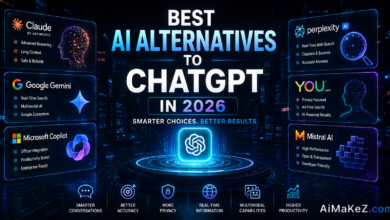
ChatGPT and Gemini are not the only players. Anthropic’s Claude is prized for long-form writing, nuanced reasoning, and a careful, safety-focused tone that many professionals love. Microsoft Copilot blends OpenAI models directly into Windows and Office, making it a natural fit for enterprise Microsoft users. Perplexity has carved out a niche as an answer engine that emphasizes citations and research.
Compared to these alternatives, ChatGPT still offers the broadest ecosystem of custom tools and integrations, while Gemini offers the tightest link to everyday Google services. If your work already lives inside Microsoft, Copilot may edge ahead; if you write long documents, Claude is worth testing. Yet for sheer versatility, the ChatGPT vs Gemini rivalry remains the benchmark others are measured against.
Best Practices
Getting great results in the ChatGPT vs Gemini matchup is less about the tool and more about how you use it. Apply these expert habits with either assistant.
- Give context. Explain your role, audience, and goal so the model can tailor its answer.
- Iterate deliberately. Treat the first response as a draft and refine with follow-up prompts.
- Verify facts. Always confirm statistics, quotes, and legal or medical claims against trusted sources.
- Use the right tool for the task. Reach for Gemini when you need current information and Google integration; reach for ChatGPT for structured reasoning and custom workflows.
- Protect sensitive data. Never paste confidential credentials or private personal records into any chatbot.
Common Mistakes to Avoid
Even experienced users trip over the same avoidable errors when comparing ChatGPT vs Gemini. Watch for these.
- Blindly trusting output. Both models can hallucinate confident but incorrect answers.
- Writing vague prompts. A one-line request produces a generic result; specificity drives quality.
- Ignoring the free tier. Many users pay before confirming the free plan already meets their needs.
- Sticking to one tool forever. Refusing to test the competitor means you never learn which fits your workflow.
- Sharing private information. Treating a public chatbot like a secure vault risks real exposure.
Accuracy, Speed, and Benchmarks
When people run a serious ChatGPT vs Gemini test, three measurements come up again and again: factual accuracy, response speed, and reasoning depth. None of these tells the whole story alone, but together they explain why the same question can produce a brilliant answer from one model and a mediocre one from the other.
On factual accuracy, Gemini benefits from live grounding in Google Search, so it tends to be stronger on breaking news, current prices, sports scores, and anything that changed recently. ChatGPT, by contrast, is often more dependable on stable knowledge such as history, science fundamentals, and step-by-step reasoning, where its training gives it a deep, consistent base to draw from.
When it comes to speed, the ChatGPT vs Gemini gap is closer than most users expect. Both assistants reply within a second or two for short prompts, though longer or more complex requests naturally take more time as the model works through the problem. In practice, the difference you feel usually comes from network conditions and how much reasoning the task demands, not from one platform being dramatically faster than the other.
Reasoning depth is where ChatGPT has built its reputation. For multi-step math, structured coding challenges, and tasks that require holding several constraints in mind at once, it frequently produces cleaner, more logically consistent output. Gemini has closed much of this gap, and for everyday reasoning the two feel remarkably similar. The honest conclusion is that no single benchmark crowns a permanent winner, which is exactly why testing both on your own real tasks matters more than any leaderboard.
Privacy, Security, and Data Handling
For businesses and privacy-conscious users in the United States and Europe, data handling is often the deciding factor rather than raw intelligence. In the ChatGPT vs Gemini comparison, both OpenAI and Google let you control whether your conversations are used to improve their models, and both offer business and enterprise tiers with stronger privacy commitments, admin controls, and data-retention settings.
If your organization operates under regulations such as GDPR, it is worth reviewing each provider’s data-processing terms before rolling out either tool company-wide. As a rule, the paid team and enterprise plans give you clearer guarantees than the free consumer versions. Regardless of which side of the ChatGPT vs Gemini choice you land on, the same golden rule applies: never paste passwords, financial account numbers, or confidential client records into any public chatbot.
A practical middle ground many teams adopt is to use AI freely for non-sensitive drafting and brainstorming, while keeping regulated or proprietary data inside approved internal systems. This lets you capture most of the productivity gains without exposing information you cannot afford to leak.
Multimodal Capabilities Compared
Modern AI is no longer just about text, and this is one of the most exciting fronts in the ChatGPT vs Gemini rivalry. Both assistants can now understand images, interpret documents, and respond to voice, but they approach multimodality from different angles.
Gemini was engineered as a natively multimodal system, meaning text, images, audio, and video flow through a single unified model. That design shows up in tasks like analyzing a chart inside a slide deck or reasoning about a short video clip. ChatGPT delivers powerful multimodal features too, including image understanding, image generation, and a natural voice mode that feels genuinely conversational, which many users find more polished for creative work.
The practical takeaway: if your daily workflow leans heavily on mixed media such as screenshots, diagrams, and recordings, test both carefully, because the better fit depends on the exact kind of media you handle most.
Which One Should You Choose?
To make the ChatGPT vs Gemini decision concrete, here is a quick guide based on who you are and what you need most.
- Writers and content creators: ChatGPT for its polished tone control and custom GPTs, with Gemini as a research and fact-checking companion.
- Developers and engineers: ChatGPT for coding, debugging, and its mature API and developer ecosystem.
- Google Workspace teams: Gemini, thanks to its built-in help across Gmail, Docs, Sheets, and Drive.
- Students and researchers: Gemini for large context windows and live sources, ChatGPT for structured explanations and data analysis.
- Everyday users: Either free tier is excellent, so in the ChatGPT vs Gemini decision, choose the ecosystem you already live in.
Most professionals eventually keep both open, treating them like two skilled colleagues with different specialties. The cost of running both free tiers is nothing, and the upside of always having the right tool for the moment is significant.
Frequently Asked Questions
Is ChatGPT or Gemini better for writing?
Both are excellent writers. ChatGPT tends to produce polished, well-structured drafts and adapts tone easily, making it a favorite for content creators. Gemini writes fluently too and shines when you need current information woven in. For pure creative writing, many users lean toward ChatGPT, while Gemini is handy for research-heavy pieces.
Which AI is more accurate?
Accuracy depends on the task. Gemini often has an edge on real-time facts because it grounds answers in Google Search, while ChatGPT frequently leads on complex reasoning and coding. Regardless of which you choose, verifying important claims against reliable sources remains essential.
Are ChatGPT and Gemini free to use?
Yes. Both offer capable free tiers that cover everyday needs. Paid plans, priced around twenty dollars per month, unlock advanced models, higher usage limits, and extra features for power users and businesses.
Can I use both ChatGPT and Gemini together?
Absolutely, and many professionals do. A common workflow uses ChatGPT for drafting and structured reasoning, then Gemini for fact-checking and pulling in live data. Combining the two often produces stronger results than relying on either alone.
Which is best for business in 2026?
If your company runs on Google Workspace, Gemini integrates seamlessly and saves time. If you need custom assistants, a mature API, and top-tier reasoning, ChatGPT is the safer bet. Many businesses adopt both and assign each to the tasks it handles best.
Final Verdict: ChatGPT vs Gemini
After weighing every angle, the ChatGPT vs Gemini debate has no single universal winner, and that is genuinely good news for you. It means the right answer depends on how you actually work. If you want the most polished reasoning, the widest range of custom tools, and a mature developer platform, ChatGPT remains the gold standard. If you live inside Google apps, need live information, and value native multimodality, Gemini is hard to beat.
Our recommendation is simple: start with the free tiers of both, run your real tasks through each for a week, and let the results decide. For most users in the United States and Europe, keeping both in your toolkit and matching the assistant to the job will deliver the best outcomes in 2026. Whichever way your ChatGPT vs Gemini choice lands, the smartest professionals are not loyal to one AI, they are fluent in choosing the right one for the moment.