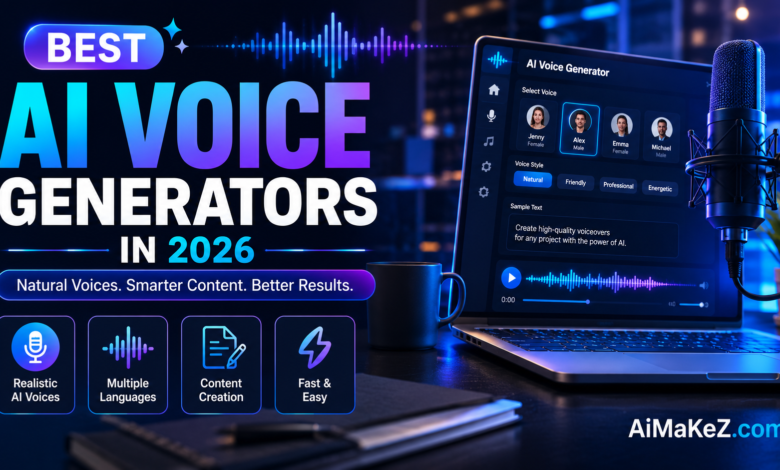
The way we produce audio content has changed dramatically. Whether you’re a podcaster looking to scale, a marketer building multilingual campaigns, or a developer integrating voice into an app, AI voice generators have become indispensable tools in 2026. These platforms can now produce speech so natural and expressive that listeners struggle to tell it apart from a real human recording. Choosing the right one, however, requires understanding what separates a great AI voice generator from a mediocre one.
This comprehensive guide covers everything you need to know about AI voice generators — from how these tools actually work, to head-to-head comparisons of the top platforms, pricing breakdowns, and expert tips for getting the best results from your chosen tool.
Table of Contents
What Are AI Voice Generators?
An AI voice generator is a software tool that uses artificial intelligence — specifically deep learning models such as neural text-to-speech (TTS) engines — to convert written text into spoken audio. Unlike the robotic, flat-sounding speech synthesizers of the early 2000s, modern AI voice generators produce voices with natural intonation, realistic pauses, emotional warmth, and even regional accents.
The technology draws on large language models (LLMs), neural networks trained on thousands of hours of human speech, and increasingly, voice cloning capabilities that allow users to replicate their own voice or a licensed voice with high fidelity. Leading platforms in 2026 include ElevenLabs, Murf AI, Play.ht, Speechify, Resemble AI, and Microsoft Azure Neural TTS, among others.
These tools aren’t just for narration anymore. They power interactive voice response (IVR) systems, audiobook production, e-learning modules, YouTube voiceovers, video game characters, and real-time conversational AI agents. The global AI voice synthesis market was valued at over $4.8 billion in 2025 and is projected to surpass $9 billion by 2028, according to multiple industry research reports.
Key Features to Look For in AI Voice Generators
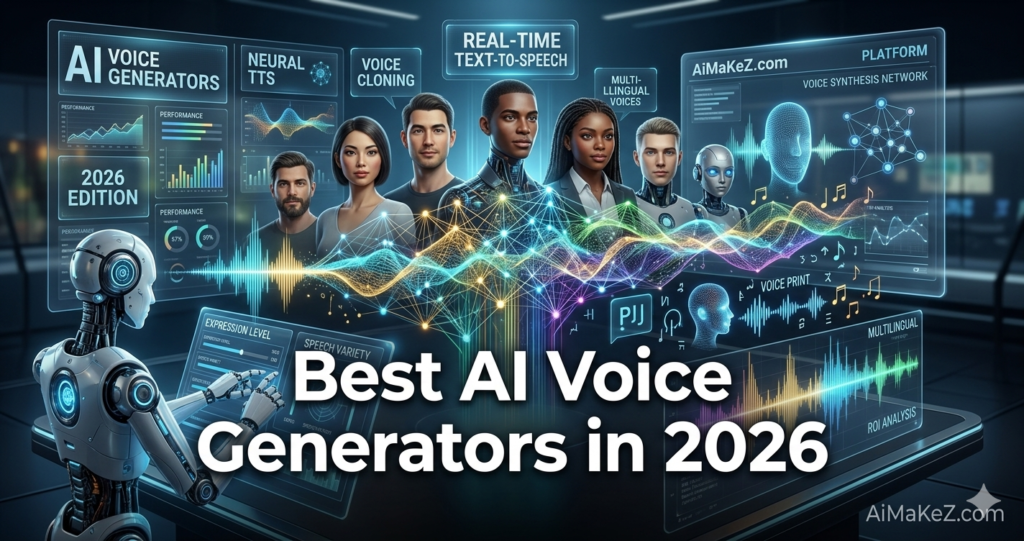
Not all AI voice generators are built the same way. When evaluating a platform, here are the features that genuinely matter:
Voice Quality and Naturalness
This is the most critical factor. A high-quality AI voice should sound indistinguishable from a real human speaker in terms of cadence, emphasis, and emotional tone. The best platforms in 2026 use neural TTS models that continuously improve through reinforcement learning from human feedback (RLHF).
Voice Cloning Capabilities
Voice cloning allows you to create a digital replica of a specific voice from a short audio sample. This is invaluable for maintaining brand consistency in marketing materials or allowing creators to produce content at scale without re-recording. ElevenLabs and Resemble AI are widely regarded as leaders in this space in 2026.
Language and Accent Support
For businesses serving international audiences, multilingual support is non-negotiable. The best platforms offer 50 to 100+ languages, along with regional accent variations. Murf AI, for example, supports over 120 voices across 20+ languages, including British English, American English, Australian English, and European Spanish.
SSML and Pronunciation Controls
Speech Synthesis Markup Language (SSML) gives you fine-grained control over pacing, pitch, volume, and emphasis. Advanced platforms also allow custom pronunciation dictionaries — essential for technical jargon, brand names, or medical terminology.
API and Integration Support
Developers and enterprise teams need robust API access to integrate voice generation directly into their workflows — whether that’s a CMS, a mobile app, a customer support system, or an automated video production pipeline.
Emotional Range and Expressiveness
The ability to generate voices that sound excited, calm, sad, or authoritative makes a significant difference for storytelling, marketing, and customer engagement. Platforms like ElevenLabs and Play.ht lead the market in emotional expressiveness.
Benefits of Using AI Voice Generators
The advantages of AI voice generators go far beyond convenience. Here’s why individuals and enterprises are adopting them at scale in 2026:
- Massive Time Savings: What would take hours in a recording studio can be produced in minutes. Content teams can generate narration for entire video libraries in an afternoon.
- Cost Efficiency: Professional voice actors charge anywhere from $200 to $500 per hour. AI voice generation platforms offer unlimited audio for as little as $30/month.
- Scalability: Need 10,000 product description audio files? AI handles it without fatigue, scheduling conflicts, or per-unit costs.
- Consistency: Human voice actors have off days. AI delivers the same quality and tone every single time, keeping your brand voice uniform across all touchpoints.
- Rapid Localization: Translate and re-voice content into dozens of languages almost instantly — without hiring multilingual voice talent for each market.
- Accessibility: Converting written content into audio makes websites and educational materials more accessible to people with visual impairments or reading difficulties.
How AI Voice Generators Work
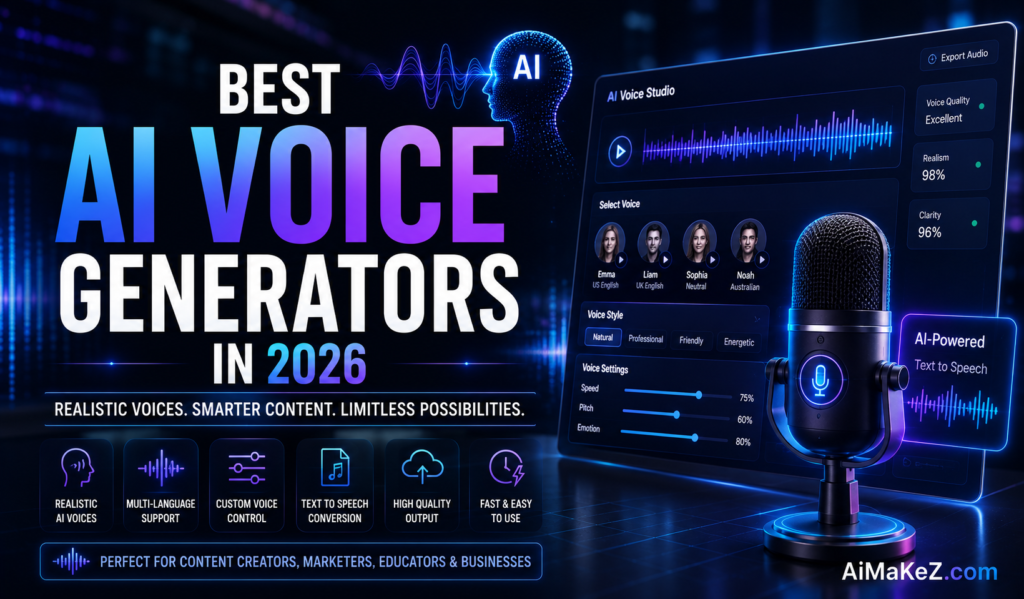
Understanding the technology behind these tools helps you use them more effectively. Here’s a simplified breakdown of the process:
Step 1: Text Input and Preprocessing
You input your text — whether through a web interface, an API call, or an integration with a content platform. The system preprocesses the text by normalizing abbreviations, numbers, and punctuation so the AI interprets them correctly (e.g., “Dr.” becomes “Doctor,” “$45” becomes “forty-five dollars”).
Step 2: Linguistic Analysis
The platform’s NLP engine analyzes sentence structure, identifies key words that need emphasis, and determines the natural rhythm and phrasing of each sentence. This step determines how conversational or formal the output will sound.
Step 3: Neural Voice Synthesis
The processed text is fed into a neural TTS model — typically a transformer-based architecture like Tacotron 2, FastSpeech 2, or a proprietary variant. This model converts the linguistic representation into a spectrogram (a visual map of sound frequencies over time).
Step 4: Vocoder Processing
A vocoder (such as WaveNet or HiFi-GAN) converts the spectrogram into actual audio waveforms. The resulting audio sounds natural because the vocoder has learned to mimic the subtle imperfections and nuances of real human speech — including breathing, mouth movements, and tonal shifts.
Step 5: Post-Processing and Export
Most platforms apply noise reduction and audio normalization before exporting the file. You can typically download in MP3, WAV, or OGG formats, or stream the audio directly via API.
Real-World Use Cases
AI voice generation technology has infiltrated nearly every industry. Here are some concrete examples:
Content Creation and YouTube
Faceless YouTube channels have exploded in popularity, largely because creators can produce high-quality video narration without appearing on camera or recording their own voice. Channels covering finance, technology, and history commonly use ElevenLabs or Play.ht voices to narrate scripts written by AI writing tools, creating a fully automated content pipeline.
E-Learning and Corporate Training
Companies like Coursera and LinkedIn Learning use AI voice synthesis to quickly update course narration when content changes, avoiding costly re-recording sessions. HR departments use it to produce safety training modules, onboarding videos, and compliance courses in-house, at a fraction of traditional production costs.
Marketing and Advertising
Agencies are using AI voice generators to produce radio-style ads, podcast sponsorships, and explainer video narration. A/B testing different voice styles and tones — something that would cost thousands with human talent — is now as simple as regenerating the audio with a different voice setting.
Audiobook and Podcast Production
Self-published authors are turning their books into audiobooks at near-zero cost using AI narration. Podcast hosts use voice cloning to produce translated versions of their episodes in Spanish, French, German, and Portuguese — reaching entirely new audiences without learning a new language.
Customer Service and IVR Systems
Enterprises have replaced static, pre-recorded IVR prompts with dynamic AI voice systems that can generate custom greetings, contextual responses, and personalized messages in real time. This dramatically improves the customer experience while reducing the operational burden on contact centers.
Accessibility Technology
Screen readers powered by AI voice synthesis provide significantly better experiences for visually impaired users than older TTS engines. Publishers are also offering AI-narrated versions of digital articles to serve audiences who prefer audio consumption.
Best AI Voice Generators in 2026
Here’s a detailed look at the top AI voice generators dominating the market in 2026:
1. ElevenLabs — Best for Voice Cloning and Realism
ElevenLabs remains the gold standard for voice cloning and emotional realism. Its Eleven Multilingual v3 model produces voices that are virtually indistinguishable from real humans and supports 32 languages. The platform offers instant voice cloning from a 1-minute audio sample, making it a favorite among content creators, game developers, and enterprise teams alike.
Best for: Podcasters, YouTubers, game developers, audiobook production.
Pricing: Free tier (10,000 characters/month); paid plans from $5/month (Starter) to $330/month (Scale).
2. Murf AI — Best for Professional Voiceovers
Murf AI is built specifically for professional voiceover production. It features an integrated studio where you can sync audio with video timelines, adjust pronunciation, and change speaking styles without re-rendering the full project. With over 120 AI voices in 20+ languages, it’s a powerhouse for e-learning and marketing teams.
Best for: Corporate training, explainer videos, marketing agencies.
Pricing: Free plan (10 minutes/month); Pro plans from $29/month.
3. Play.ht — Best for Long-Form Content
Play.ht excels at generating long-form narration without the latency or inconsistencies that plague some competitors. Its PlayHT 3.0 model produces highly expressive speech with minimal editing required. The platform also offers a powerful API that content publishers use to generate audio versions of blog posts automatically.
Best for: Bloggers, publishers, podcast networks, developers.
Pricing: Free tier available; paid plans from $31.20/month (Creator) to $99/month (Pro).
4. Speechify — Best for Personal Productivity
Speechify is less of a production tool and more of a personal consumption powerhouse. It converts any text — PDFs, web articles, emails, Google Docs — into high-quality audio that you can listen to at up to 4.5x speed. Celebrities like Snoop Dogg and Gwyneth Paltrow have licensed their voices to the platform, adding novelty to utility.
Best for: Students, executives, professionals who consume large amounts of written content.
Pricing: Free plan; Speechify Premium at $139/year.
5. Resemble AI — Best for Developers and Enterprises
Resemble AI is purpose-built for developers and enterprises that need to integrate voice generation at scale. It offers real-time voice synthesis with sub-200ms latency, making it suitable for live conversational AI applications. Its emotional AI capabilities allow dynamic adjustment of voice tone based on context — useful for customer service bots and interactive storytelling.
Best for: Developers, conversational AI, real-time applications.
Pricing: Pay-as-you-go ($0.006/second); enterprise plans available.
6. Microsoft Azure Neural TTS — Best for Enterprise Scale
Microsoft’s Azure Cognitive Services TTS offering is the preferred choice for large enterprises that need reliable, scalable, and secure voice synthesis tightly integrated with their existing Microsoft infrastructure. It supports 400+ neural voices across 140 languages and offers custom neural voice creation under their Custom Neural Voice program.
Best for: Enterprises using Microsoft Azure, IVR systems, large-scale content localization.
Pricing: Pay-as-you-go ($16 per 1M characters for standard; $100 per 1M for custom neural).
7. Lovo AI — Best All-Around Tool for Creators
Lovo (now rebranded as Genny) combines an AI voice generator with a full video production studio. You can write a script, select a voice, add background music, and export a finished video — all within one platform. It supports over 500 voices in 100+ languages and is particularly popular with social media marketers and educators.
Best for: Social media creators, educators, marketers.
Pricing: Free plan; Basic at $19/month; Pro at $48/month.
Pros and Cons of AI Voice Generators
| Platform | Pros | Cons |
|---|---|---|
| ElevenLabs | Best voice realism, excellent cloning, multilingual | Higher cost at scale, character limits on lower plans |
| Murf AI | Studio interface, great for video sync, large voice library | No real-time synthesis, limited API flexibility |
| Play.ht | Excellent for long-form, strong API, auto-blog audio | UI can feel cluttered, occasional latency issues |
| Speechify | Perfect for personal use, fast playback speeds | Not designed for content production workflows |
| Resemble AI | Real-time synthesis, enterprise-grade, emotional AI | Steeper learning curve, complex pricing |
| Azure Neural TTS | Massive scale, 400+ voices, enterprise security | Requires Azure setup, less beginner-friendly |
| Lovo/Genny | All-in-one production, 500+ voices, video integration | Quality slightly below ElevenLabs at top tier |
Pricing Overview
Pricing structures vary significantly across AI voice generator platforms. Most offer a combination of free tiers, monthly subscriptions, and enterprise contracts. Here’s what to expect in 2026:
Free Tiers: Almost every major platform offers a free plan, though they come with significant limitations — usually 10,000 characters per month or 10 minutes of audio. These are suitable for testing but not for professional production.
Starter/Creator Plans ($5–$35/month): These plans unlock higher character limits (typically 100,000–500,000 characters per month), access to premium voices, and basic voice cloning. ElevenLabs’ Starter plan at $5/month is widely considered the best entry-level value in 2026.
Professional Plans ($29–$150/month): Designed for agencies and content teams, these plans offer unlimited or very high character limits, commercial licensing, team seats, and API access. Murf Pro at $29/month and Play.ht Pro at $99/month fall into this bracket.
Enterprise Plans (Custom Pricing): Large organizations typically negotiate custom contracts that include custom voice development, SLA guarantees, dedicated infrastructure, and compliance certifications (HIPAA, SOC 2, GDPR). Resemble AI, Azure, and ElevenLabs all offer enterprise tiers.
Pay-As-You-Go: For sporadic or variable usage, platforms like Resemble AI and Azure offer per-character or per-second billing that can be more economical than a subscription when volume fluctuates month to month.
Best Practices for Getting the Best Results
Even the best AI voice generator delivers mediocre results if you don’t use it correctly. Here are expert-level practices to maximize output quality:
Write for the Ear, Not the Eye
Text written for reading doesn’t always translate well to audio. Use contractions (“it’s” instead of “it is”), write shorter sentences, and spell out abbreviations and numbers. Avoid bullet points and headers in your audio scripts — instead, use transition phrases like “First,” “Next,” and “Finally.”
Use SSML Tags Strategically
For platforms that support SSML, use <break> tags to add natural pauses, <emphasis> for stress, and <prosody rate="slow"> for complex technical sections. This level of control dramatically improves listener comprehension and engagement.
Choose the Right Voice for Your Audience
A warm, conversational voice works well for self-help content and podcasts. A crisp, authoritative voice suits financial or legal narration. Playful voices work for children’s content. Many platforms let you preview dozens of voices before committing — take full advantage of this.
Batch Your Content for Efficiency
If you’re generating audio for multiple pieces of content, use the API to batch-process requests overnight. This not only saves time but also avoids hitting rate limits during peak usage hours on shared infrastructure.
Always Review the Output Before Publishing
AI voice generators still make mistakes — mispronounced proper nouns, awkward pauses, or unnatural stress patterns. Always do a full listen-through before publishing. Most platforms allow you to add custom pronunciation rules for recurring problem words.
Common Mistakes to Avoid
Avoiding these pitfalls will save you time, money, and embarrassment:
- Ignoring licensing terms: Not all AI-generated voices are licensed for commercial use on every plan. Always verify your plan includes commercial rights before publishing monetized content.
- Using the wrong voice clone without consent: Voice cloning someone else’s voice without their explicit permission is ethically wrong and, in many jurisdictions, now illegal under emerging AI voice protection laws.
- Neglecting quality review: Never publish AI-generated audio without listening to it first. Automated production pipelines can silently produce errors at scale.
- Overlooking pronunciation dictionaries: Brand names, technical terms, and proper nouns are the most common sources of error. Build a custom pronunciation library from day one.
- Choosing a platform based on price alone: The cheapest option rarely delivers the voice quality needed for professional content. A poor-sounding voice will hurt your brand more than it saves in costs.
- Not testing multilingual output: Even platforms that claim strong multilingual support often have inconsistent quality across languages. Always test the specific language and accent you need before committing to a subscription.
Comparison With Alternatives
While dedicated AI voice generator platforms dominate for professional use, there are adjacent alternatives worth knowing about:
Google Text-to-Speech (WaveNet): Free and highly capable, Google’s WaveNet-powered TTS is embedded in Android devices, Google Assistant, and Google Cloud. It’s excellent for developers integrating basic voice features but lacks the voice cloning, style controls, and interface that dedicated platforms offer.
Amazon Polly: Amazon’s TTS service is tightly integrated with AWS and ideal for teams already invested in the Amazon ecosystem. It supports SSML extensively and is very cost-effective at scale, but its voice quality lags slightly behind ElevenLabs and Play.ht.
Human Voice Actors: For flagship brand content, high-stakes commercial campaigns, or projects requiring emotional nuance that AI still struggles to capture consistently, professional voice actors remain the gold standard. Think of AI voice generators as the right choice for 80% of use cases — but not a universal replacement for human talent.
Frequently Asked Questions
1. What is the most realistic AI voice generator in 2026?
ElevenLabs is widely considered the most realistic AI voice generator in 2026, thanks to its Eleven Multilingual v3 model and industry-leading voice cloning technology. Its voices capture subtle human qualities — breathing, micro-pauses, emotional tone shifts — that make the output virtually indistinguishable from real recordings in many contexts.
2. Can I use AI-generated voices commercially?
Yes, but you must verify that your specific plan includes a commercial use license. Most platforms offer commercial rights on paid plans. Free tier users are typically restricted to personal, non-monetized use. Always read the terms of service carefully, particularly regarding voice cloning — using another person’s voice likeness without consent may violate both platform policies and emerging AI legislation.
3. How much does an AI voice generator cost?
Costs range from free (with limited usage) to hundreds of dollars per month for high-volume professional plans. ElevenLabs Starter starts at $5/month. Murf AI Pro is $29/month. Play.ht Pro is $99/month. Enterprise plans with custom neural voices and dedicated SLAs are priced individually and can range from $500 to several thousand dollars per month depending on usage volume.
4. Is voice cloning legal?
Voice cloning your own voice, or a voice for which you have explicit written consent, is legal in most jurisdictions. However, cloning another person’s voice without their permission is increasingly regulated. As of 2026, several US states — including California and New York — have enacted specific AI voice protection laws. The EU’s AI Act also addresses biometric voice data. Always ensure you have proper consent and follow platform guidelines.
5. Which AI voice generator is best for YouTube?
ElevenLabs and Play.ht are the top choices for YouTube content creators in 2026. ElevenLabs excels for creators who want the most realistic, emotionally expressive narration and are willing to invest in a mid-tier plan. Play.ht is preferred by high-volume creators who produce large amounts of long-form content and need robust API access and consistent output quality at scale.
Final Verdict
The market for AI voice generators in 2026 is richer, more competitive, and more capable than ever before. Whether you’re a solo creator trying to produce your first audiobook, a marketing manager localizing campaigns across Europe, or an enterprise architect building the next generation of conversational AI — there is a platform designed specifically for your needs and budget.
If you’re starting out, ElevenLabs offers the best quality-to-price ratio at entry level. For professional voiceover production, Murf AI’s studio environment is hard to beat. Developers building real-time applications should explore Resemble AI or Azure Neural TTS. And if you simply want to consume content faster and smarter, Speechify is a game-changer.
The technology will only continue to improve. Neural voice models are getting faster, more emotionally intelligent, and more linguistically versatile with every quarterly release cycle. The question is no longer whether AI voice generators are good enough — it’s which one is right for your specific workflow.
Invest a few hours in testing two or three platforms before committing to a subscription. Most offer generous free trials. The right choice will save you time, money, and production headaches — and deliver audio content that genuinely engages your audience.